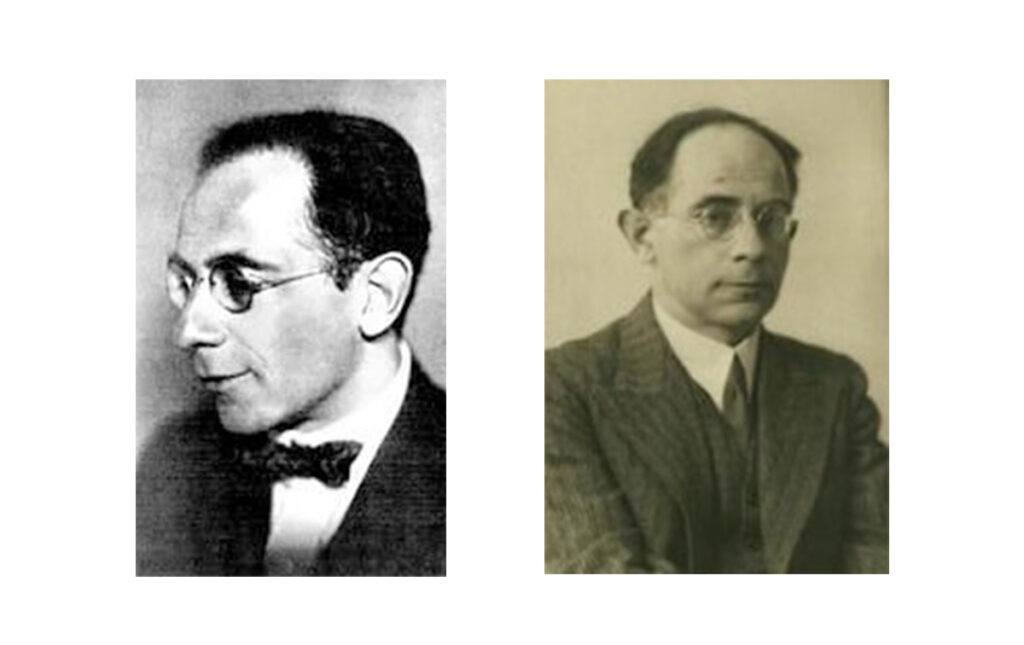
A forgotten writer and a nearly lost book. Paul Kornfeld (11 December 1889 Czechia, – 25 April 1942, Lodz, Poland) was one of the many writers and artists who lost their life as a result of the Nazi regime.
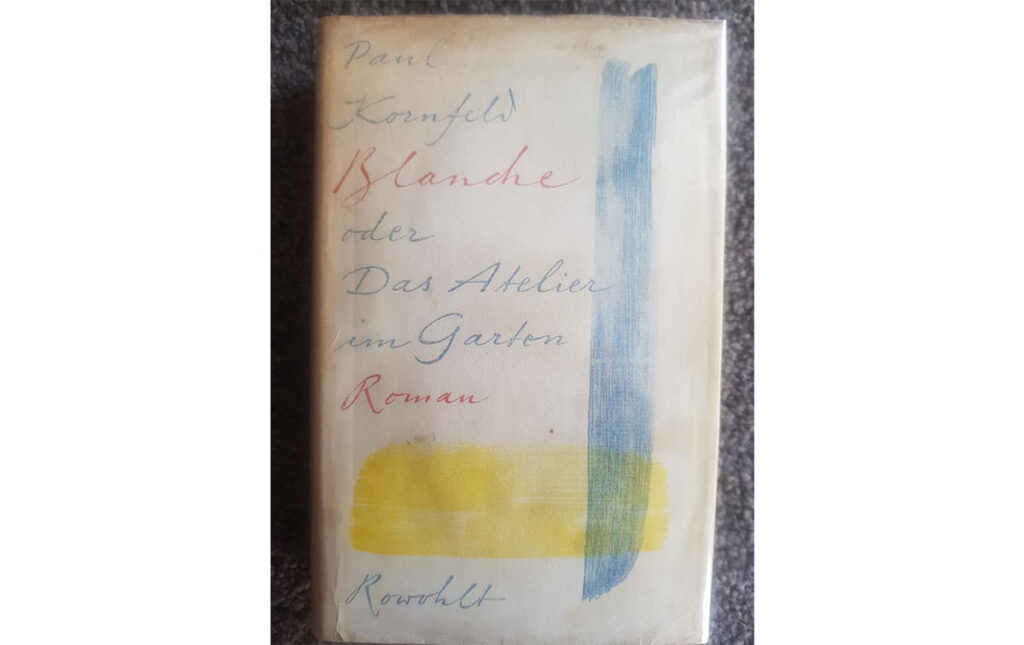
He worked as a dramatist, expressionist writer and theorist, and stage director, and was born and raised in Prague in the same generation as Franz Kafka. He eventually moved to Germany and made an important contribution to German expressionism on the stage. A monumental novel “Blanche oder das Atelier im Garten” was long believed having been lost, after Kornfeld had worked on it between 1933-1941. But the manuscript survived as Kornfeld managed to pass it on to a Czech friend who smuggled it to London, before he was sent to the concentration camp in Lodz where he died half a year later of Typhoid. In 1957 it got published by Rowohlt, I found this 1st edition years ago, after a new edition appeared in Germany in 2000 and the novel was widely reviewed.
The novel is somewhat difficult to evaluate. The main character, a young woman Blanche Riedinger rents a dilapidated garden studio which she uses as a place for her artistic work. This venue is the backdrop and meeting point of many of the novel’s characters. Kornfeld is not a disciplined writer such as Fontane, Kafka, neither does he have the analytical mind of Musil.
He lets his figures speak their way, sometimes their statements bordering on Kitsch, the “soul” of things being a recurring topic in long meandering dialogues. But the strength of the novel lies in its overall agenda:
the unwillingness of the main character to accept reality (Blanche being evicted of her studio after 2 years), a tragedy being the outcome, which is not a result of society’s ills as let’s say in Fontane’s seminal Effi Briest, but because of the otherworldliness and nihilism of Blanche. A fascinating book, reminiscent of the great Georg Hermann, a contemporary of Kornfeld.
 January 3, 2024
 December 30, 2023
 December 30, 2023