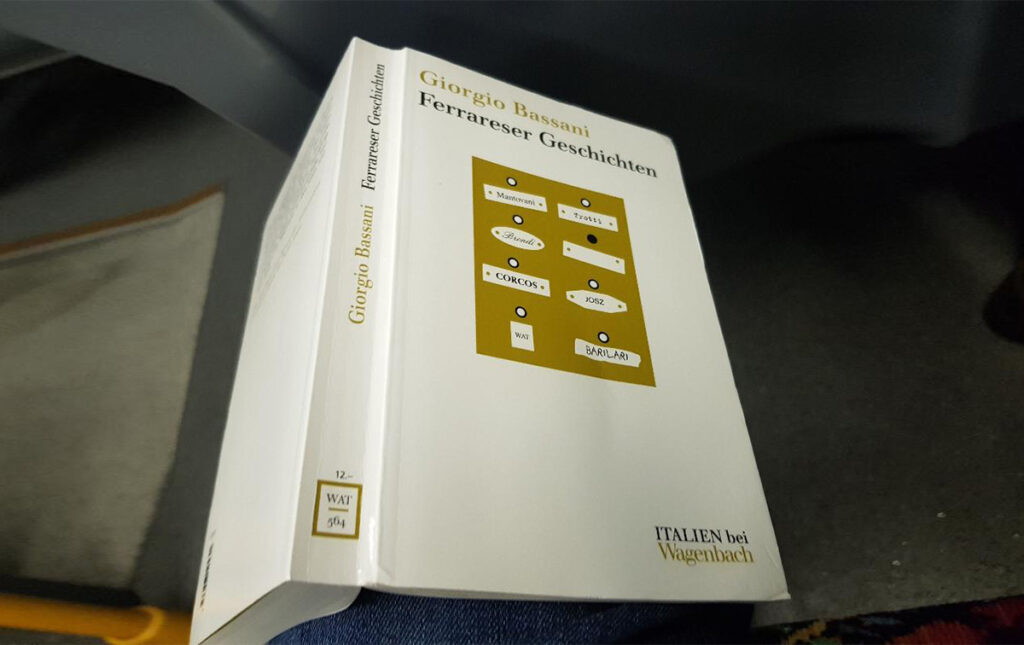
Giorgio Bassani’s Ferrara, like all true cities, is a myth, a state of being and of having been, and he haunts it with the nostalgic passion of the exile. ( His “The Garden of the Finzi‐Continis” was an ambiguous vision of paradise lost, masterfully translated into a film by Vittorio de Sica in 1970, one of my all time favourite Italian films, which is still awaiting a Blue Ray release.)
The 5 stories from Ferrara add to the vision by enlarging upon the ambiguities.
Each is a self‐contained fragment, but meticulously explored in depth until the texture of its details begins to yield meanings beyond meanings that define its place with in the whole context. Perspective requires distance. Like Henry James (with whom he has other points in common) Bassani feigns detachment, a tone of cool, compassionate irony that makes it almost safe to probe old wounds and speak of the unspeakable. The first story is a particularly moving account of the life of Lida Mantovani, who comes from a poor background and marries a bookbinder, a man much older than herself. We witness a quiet marriage and an attitude of modesty and realistic expectations of life, unlike today’s demands upon everything. The question at the end after her husband dies is whether he had been really happy, or would he have liked his own child ? Lida suggests that this might have been the only shadow in his life, but his unexpected death took care of his silent desperation.
( 50 pages, read on 9th of January, Rangiora Christchurch, Christchurch Rangiora. No major interruptions except one disturbed passenger, muttering to himself and obviously a regular, as the bus driver told him when to get off. The last 15 minutes I was the only passenger.)


 January 3, 2024
 December 30, 2023
 December 30, 2023