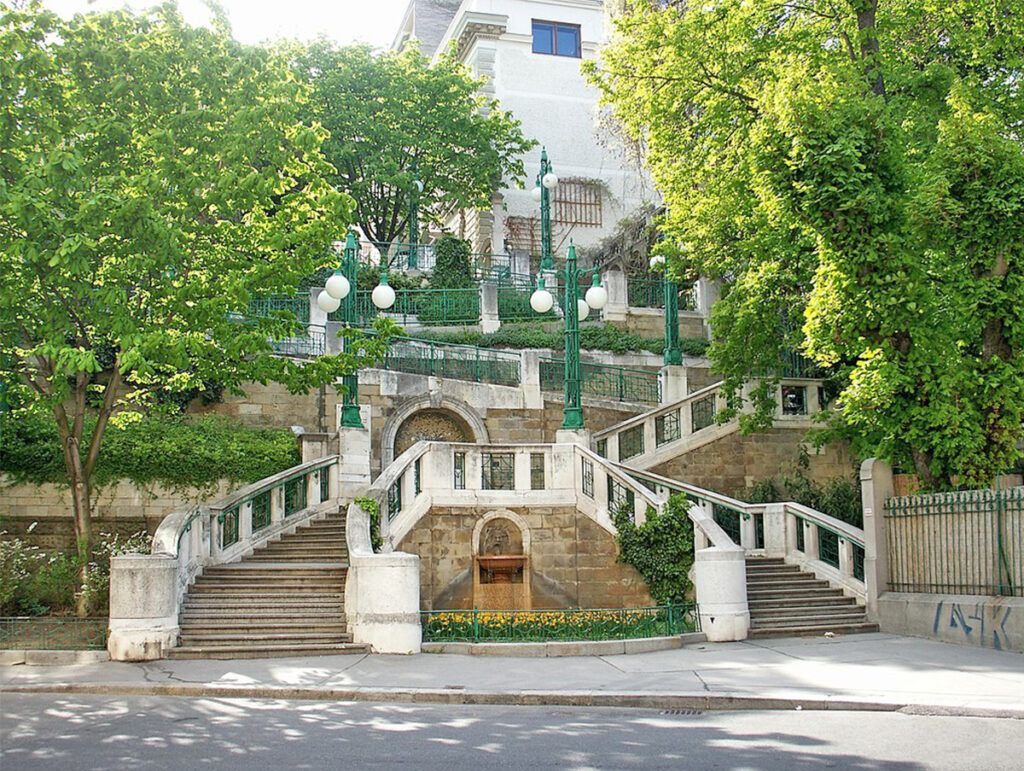
I always had a bit of an obsession with Austrian culture, its musical part being one being of the most importance to me (Haydn, Mozart, Schubert, Mahler, Schoenberg, Webern, Berg), but the literary achievements coming out of this small country are also unique and I have always been fascinated by Heimito von Doderer. Re-reading his 2 seminal and gargantuan works “Die Strudlhofstiege”
(and the subsequent “Die Daemonen” ) makes me again marvel at the descriptive power of observation Dodderer possesses. Criticism was always plentiful, e.g. from Hans Mayer, the eminent German analyst of literature and related phenomena who criticised Doderer’s language as “sloppy”, meaning that Dodderer obviously refused to adhere to an organised, finely attuned and reliable way of writing. He responded: “For most nations, language is what they have in common. For the Germans, it’s the spelling. Hence the riding around on it.” The myriads of characters and situations Dodderer describes in his often labyrynthic works though seem to successfully achieve the overall depiction of ‘chaos’, history as a never ending pool of possibilities and surprises.In an effort to capture all perspectives at once, Dodderer seeks to overcome the ordering and restrictive perspective of the novelist, avoiding any smooth spelling. He refuses to write a fluid style and insists on the ungrammatical and colloquial. In his own words: “The book shows everything that belongs to the existence of a simple person. And what long levers – from Constantinople to Vienna, from Budapest to Buenos Aires – life needs and uses and how many forces it uses to move even a single such simple man through the stages of his fate.” There are about 30 main protagonists in the Strudlhofstiege, so a short summary is impossible.
The book has been translated into English. Highly recommended, one of the seminal novels in German language 20th century literature.

 January 3, 2024
 December 30, 2023
 December 30, 2023